How to Switch Your Cat to a New Litter Without the Stress
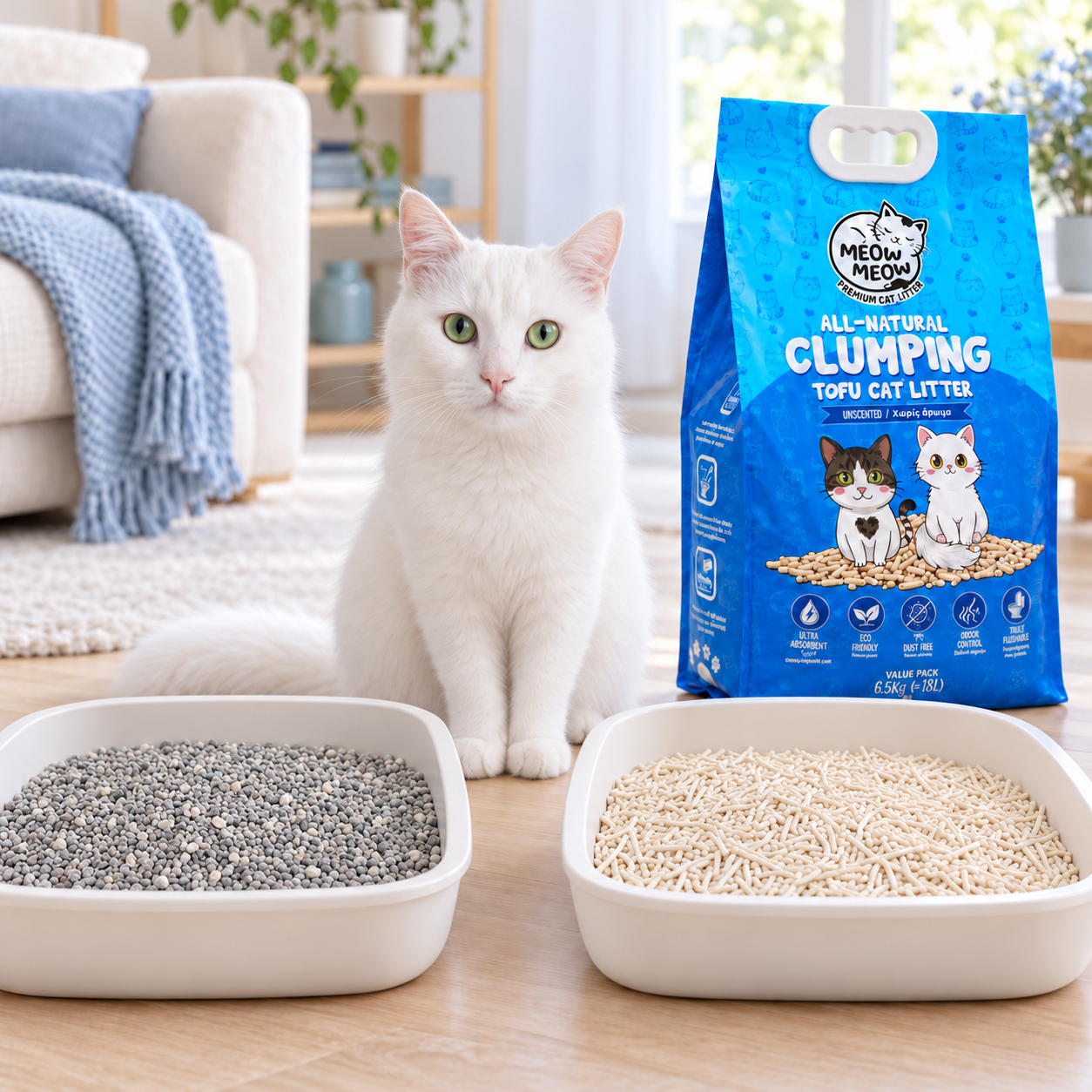
Cats are creatures of habit. The tray, its location and the feel of the litter under their paws all become part of a routine they rely on every day.
That is why changing litter can be harder than it looks. A litter that suits your home may still be ignored if it appears in the tray overnight. Some cats will hesitate, sniff and walk away. Others may start going elsewhere in the house.
A gradual change can make the transition easier, although every cat is different. With a simple plan, patience and a few practical tray habits, you can introduce a new litter—such as plant-based tofu litter—while keeping as much of your cat’s routine familiar as possible.
The short answer
For a clumping litter such as clay or tofu, try switching gradually over 7 to 14 days.
Start by mixing a small amount of the new litter into the old litter. Increase the proportion every few days, while keeping the tray in the same place and maintaining your usual cleaning routine. Slow down if your cat hesitates.
The ratios below are approximate guideposts, not a timetable every cat will follow. Change one thing at a time: the litter, the tray or its location.
If you are switching from silica crystals, consider offering the tofu litter in a second tray instead of mixing the two. Silica is usually non-clumping, so combining it with clumping litter can make the change in cleaning routine less straightforward.
Why cats can be wary of a new litter
To us, litter is a household product. To a cat, it is part of a very personal routine.
Texture under their paws
Cats dig before and after using the tray, so they notice how a litter feels. Fine clay granules, large silica crystals and small plant-based pellets all feel different. A sudden change in texture may make a cat hesitate.
Smell
Cats have a highly developed sense of smell. A strongly perfumed litter—or a tray washed with a heavily scented cleaning product—may be off-putting. An unscented litter avoids introducing a new fragrance during the change. Cornell’s Feline Health Center notes that many cats prefer unscented litter.
Sound and weight
Lightweight pellets move and sound different from heavy clay. This may be another unfamiliar detail during the first few days.
Routine
The tray’s location, the time of day it is cleaned and the depth of litter all form part of your cat’s routine. Keeping these details consistent can make a litter change simpler.
Before you start
A little preparation makes the transition smoother.
Choose a quiet week. Avoid starting the switch while you are moving house, travelling, introducing a new pet or having building work done.
Keep the same tray in the same place. If you also want a new tray, introduce it before or after the litter change—not at the same time.
Have both litters ready. You will need enough of your current litter to mix with the new litter for one to two weeks.
Clean the tray if needed. If it is due for a wash, empty it, clean it with warm water and a mild, cat-appropriate cleaner, rinse well and let it dry fully. Then refill it with the familiar litter and the new litter at the starting ratio.
Check your scoop. Small pellets may need a scoop with openings that let loose litter fall back into the tray while the clumps stay on the scoop.
A simple 7–14 day transition plan
This schedule is a guide for switching from one clumping litter to another. The percentages refer to the approximate volume of old and new litter in the mix when you fill or refresh the tray. They may change as you scoop and top up.
| Days | Old litter | New litter | What to look for |
|---|---|---|---|
| Days 1–3 | About 75% | About 25% | Your cat uses the tray as usual |
| Days 4–6 | About 50% | About 50% | Normal digging and covering |
| Days 7–9 | About 25% | About 75% | No hesitation at the tray |
| Days 10–14 | 0% | 100% | Your cat is using the new litter comfortably |
Move to the next stage only if your cat is using the tray normally. If they hesitate, stay at the current stage for a few extra days—or return to the previous mix—before continuing.
Days 1–3: introduce a little
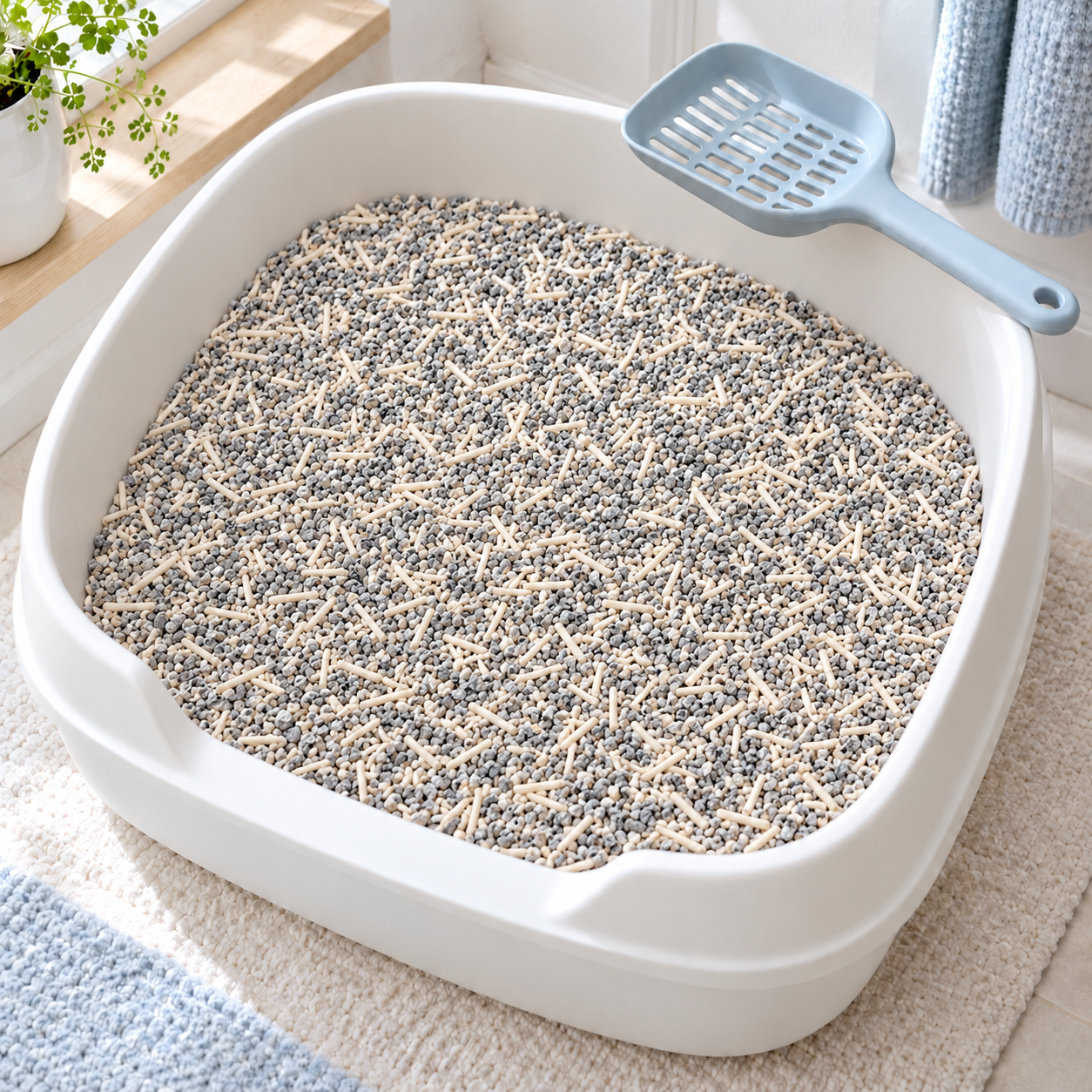
Fill the tray with your current litter, then mix in roughly a quarter of the new litter by volume. Stir it through evenly rather than leaving it in a separate patch on top.
Keep to your normal cleaning routine and watch how your cat behaves at the tray.
Days 4–6: half and half
When you refresh the litter, aim for roughly equal volumes of old and new litter. As you scoop or top up between changes, the exact proportion in the tray may vary.
Remove clumps and solid waste at least once a day. When topping up, add the new litter.
Days 7–9: mostly new
Increase the new litter to around three quarters of the mix. Watch for signs that your cat is digging and covering as usual.
Days 10–14: complete the switch
Once your cat is comfortable with the transition, empty and clean the tray as needed, then fill it with the new litter to the depth recommended on the product packaging. For Meow Meow, an even depth of approximately 5–7 cm is a useful guide.
For more on tray depth, daily scooping and full litter changes, see our guide to [how often you should change cat litter].
How to tell the switch is working
Signs that your cat may be comfortable with the new litter include:
Using the tray at their usual times
Digging and covering as normal
Stepping into the tray without hesitation
No accidents elsewhere in the home
Signs that you may need to slow down include:
Sniffing the tray and walking away
Perching on the edge rather than standing in the litter
Scratching the floor or wall around the tray instead of the litter
Going to the toilet beside the tray or elsewhere
If you notice these signs, return to the previous mix for a few days. Your cat may be reacting to the texture or another part of the setup, so give them time and keep other details consistent.
A change in litter-box habits can also have medical or behavioural causes. If the change is sudden, persistent or continues after you return to the familiar litter, contact your veterinarian.
Seek urgent veterinary care if your cat repeatedly strains or tries to urinate but produces little or no urine, or seems distressed in the tray. Straining can be a life-threatening emergency, especially in male cats.
Common mistakes to avoid
Changing everything at once
A new litter, a new covered tray and a new location on the same day can be too much. Change one thing, let your cat settle, then change the next.
Leaving the new litter in a separate layer
Sprinkling new litter on top can make the difference more obvious. Mixing it evenly helps introduce the new texture gradually.
Filling the tray too shallowly
With clumping litter, the recommended depth can help clumps form without sticking to the bottom of the tray. Follow the product instructions and adjust if your cat seems uncomfortable with the depth.
Adding scent to “help”
Air fresheners, perfumed sprays or strongly scented cleaners near the tray can make the area less appealing. Keep it as neutral as possible.
Judging the new litter on day one
Clumping, odour control and tracking are easier to assess once the tray contains mostly the new litter. Give your cat time to adjust before drawing conclusions.
Switching from clay to tofu litter
Many cat owners in Cyprus switch from bentonite clay to plant-based tofu litter because it is lighter to carry and produces much less airborne dust when poured and scooped.
A few practical points can help during the change:
Expect a lighter bag. Tofu litter weighs less than clay for the same volume. Meow Meow’s 6.5 kg pack contains approximately 18 litres, so compare by volume rather than weight when filling the tray.
Expect less dust when pouring. Clay litter can release a visible cloud when poured. Meow Meow is labelled 99% dust-free, which can help keep the area around the tray cleaner during pouring, levelling and scooping. Read more in our guide to [what happens when cat litter creates dust].
Let clumps set for a moment. Tofu pellets absorb liquid quickly and form firm clumps. Allowing a fresh clump a short moment to set before scooping can make it easier to lift in one piece. Our article on [why firm-clumping litter means less waste] explains why this matters.
Follow safe disposal guidance. Do not flush litter unless the product instructions and your local sewerage provider explicitly permit it. When in doubt, dispose of used litter in a sealed bin. Never flush clay litter.
Switching from silica crystals to tofu litter
Silica crystal litter is usually non-clumping. It absorbs urine and holds it in the tray until the litter is replaced.
Moving to a clumping litter changes your routine: remove urine clumps and solid waste every day, then top up with fresh litter as needed.
Silica crystals and tofu pellets also feel very different underfoot. Rather than mixing them, consider putting a second tray with tofu litter nearby while keeping your cat’s usual tray available. This lets your cat explore the new litter at their own pace.
How much litter will you need during the switch?
During the transition, you will be using two litters at once, so plan to have both on hand for one to two weeks.
After the switch, keep a simple record: note the date you open a new bag and the date it runs out. Usage depends on the number of cats, tray size, litter depth and cleaning routine, so your own record gives the most reliable estimate. Our guide to [cat litter cost per month in Cyprus] shows how to turn that record into a monthly cost.
Once you know your household’s usage, it is easier to choose a subscription quantity so you neither run short nor build up an unnecessary surplus.
Patience pays off
A gradual change can help your cat get used to a new litter while you keep their routine familiar.
Mix slowly when switching between clumping litters, consider a second tray when switching from silica, and let your cat set the pace. The transition may take a week or two—or longer if your cat needs more time.
For quick answers on tofu litter, kittens, odour control and disposal, read our [Tofu Cat Litter FAQ: 20 Questions Answered in Cyprus].
Try Meow Meow Tofu Cat Litter
Give your cat a clean, comfortable litter-box experience with Meow Meow Premium Tofu Cat Litter.
Each value pack contains 6.5 kg—approximately 18 litres—of unscented, plant-based litter, delivered throughout Cyprus, with free collection available in Paphos.
Subscribe for automatic monthly delivery and receive 5% off our standard prices.
A cleaner litter box. A happier home.
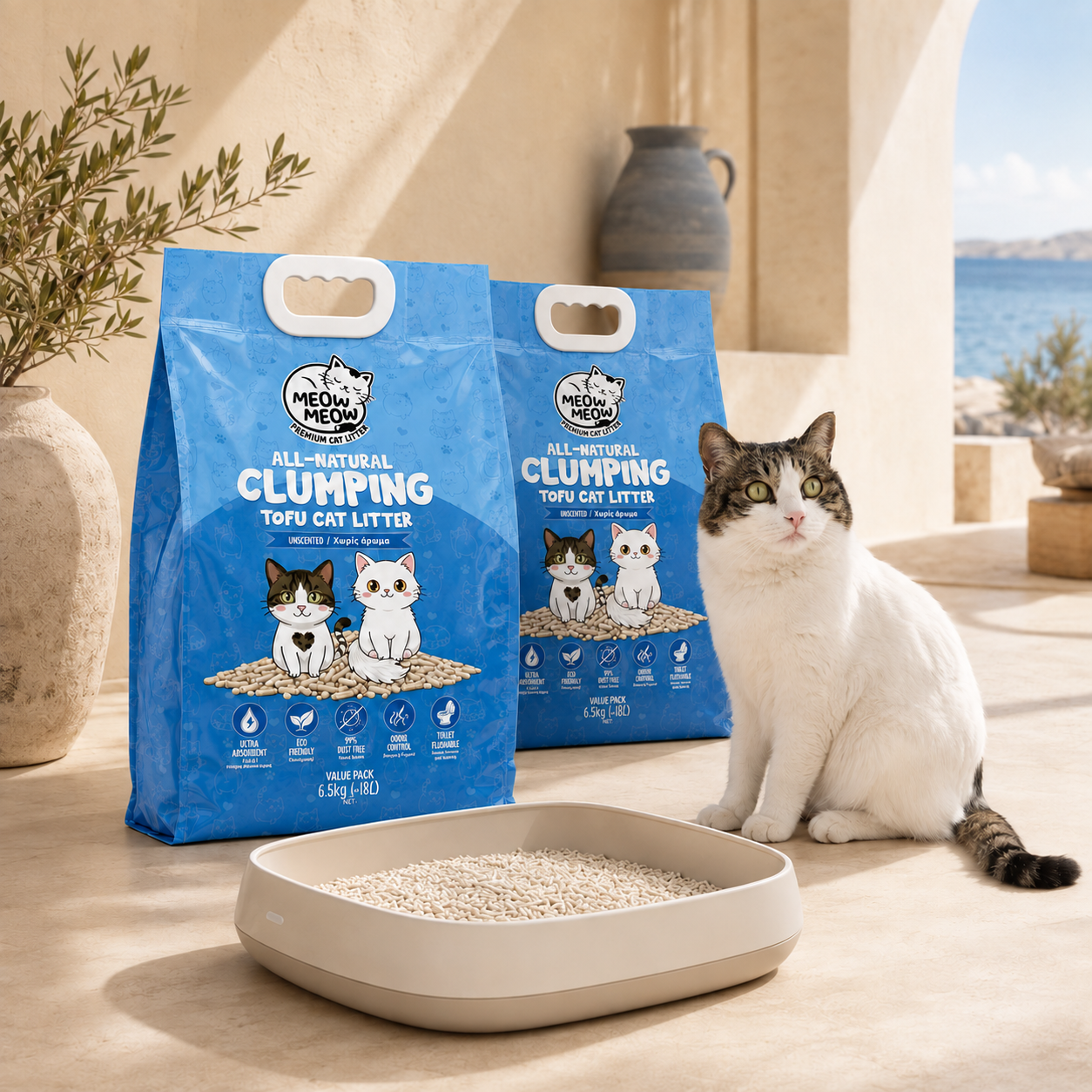
Designed for quality, convenience and your cat’s well-being, Meow Meow Premium Tofu Cat Litter provides a cleaner, fresher and more natural litter-box experience.
Made from high-quality soybean fibres and plant-based binders, its highly absorbent formula rapidly forms firm, compact clumps for quick and efficient scooping. A bacteriostatic agent helps suppress bacterial growth and control unpleasant litter-box odours—without added fragrance.
The carefully selected 2.0 mm litter grain size is less likely to cling to your cat’s paws, helping reduce litter tracking around your home. It is also 99.5% dust-free, creating a cleaner litter area and a more healthy and comfortable experience for both cats and their owners.
Benefits and features
Made from high-quality soybean fibres and plant-based binders
Natural and effective odour control
Bacteriostatic formula helps suppress bacterial growth and odours
Highly absorbent with fast, compact clumping
2.0 mm grain size helps reduce litter tracking on cats’ paws
99.5% dust-free
Unscented, with no added fragrance
Biodegradable and environmentally considerate
Free from formaldehyde, harmful chemicals, toxins and industrial binders
Lightweight and convenient to carry, store and pour
Suitable for cats of all breeds and life stages
Flushable in small amounts, where permitted by local plumbing and wastewater regulations
Pack size: 6.5 kg
Volume: Approximately 18 litres
Fragrance: Unscented
A cleaner litter box. A happier home. Make the switch to Meow Meow today.
Never run out of litter - Subscription Option Available!
Choose the number of bags you need and subscribe for automatic monthly delivery. Your order will be processed and sent each month without the need to reorder, giving you one less thing to remember—and 5% off our standard prices.