Tofu Cat Litter FAQ: 20 Questions Answered in Cyprus
Thinking of switching to tofu cat litter? Get clear answers on safety, dust, clumping, odour control, disposal, value and use in Cyprus.
Tofu cat litter is still relatively new to many cat owners in Cyprus. The name can sound unusual, and it naturally raises questions: What is it made from? Does it really clump? Is it dusty? Will a cat accept it? And does a 6.5 kg bag offer the same amount of litter as a 6.5 kg bag of bentonite?
This guide answers those questions plainly. It explains both the advantages and the practical points that matter when changing litter, because the best product is not simply the one with the longest list of claims. It is the one that suits your cat, your home and your daily routine.
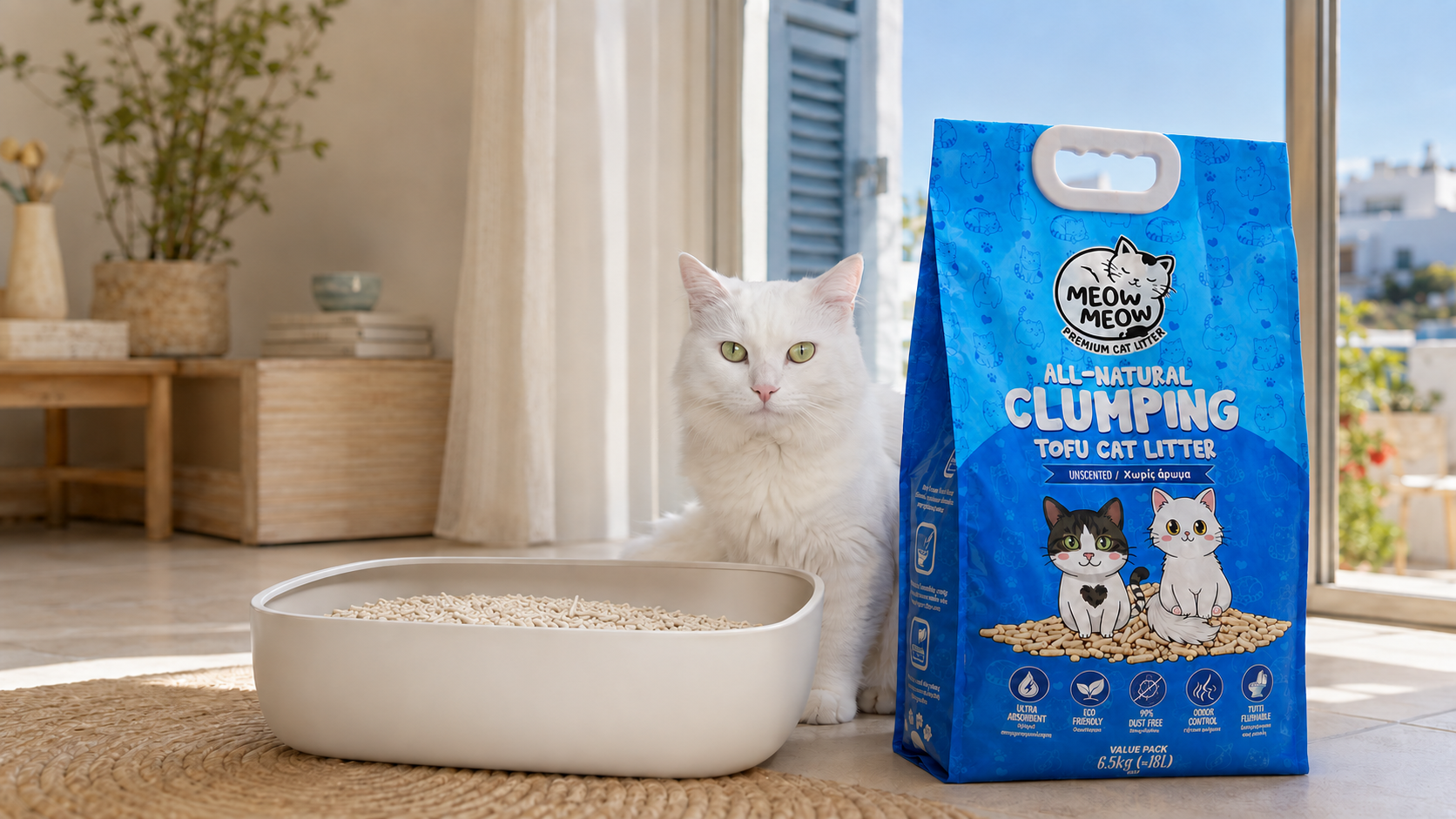
Meow Meow Premium Tofu Cat Litter is an unscented, plant-based clumping litter supplied in a lightweight 6.5 kg value pack of approximately 18 litres. It is designed to provide fast clumping, effective odour control and everyday convenience with substantially less dust than many traditional mineral litters.
Part 1: Understanding tofu cat litter
1. What is tofu cat litter?
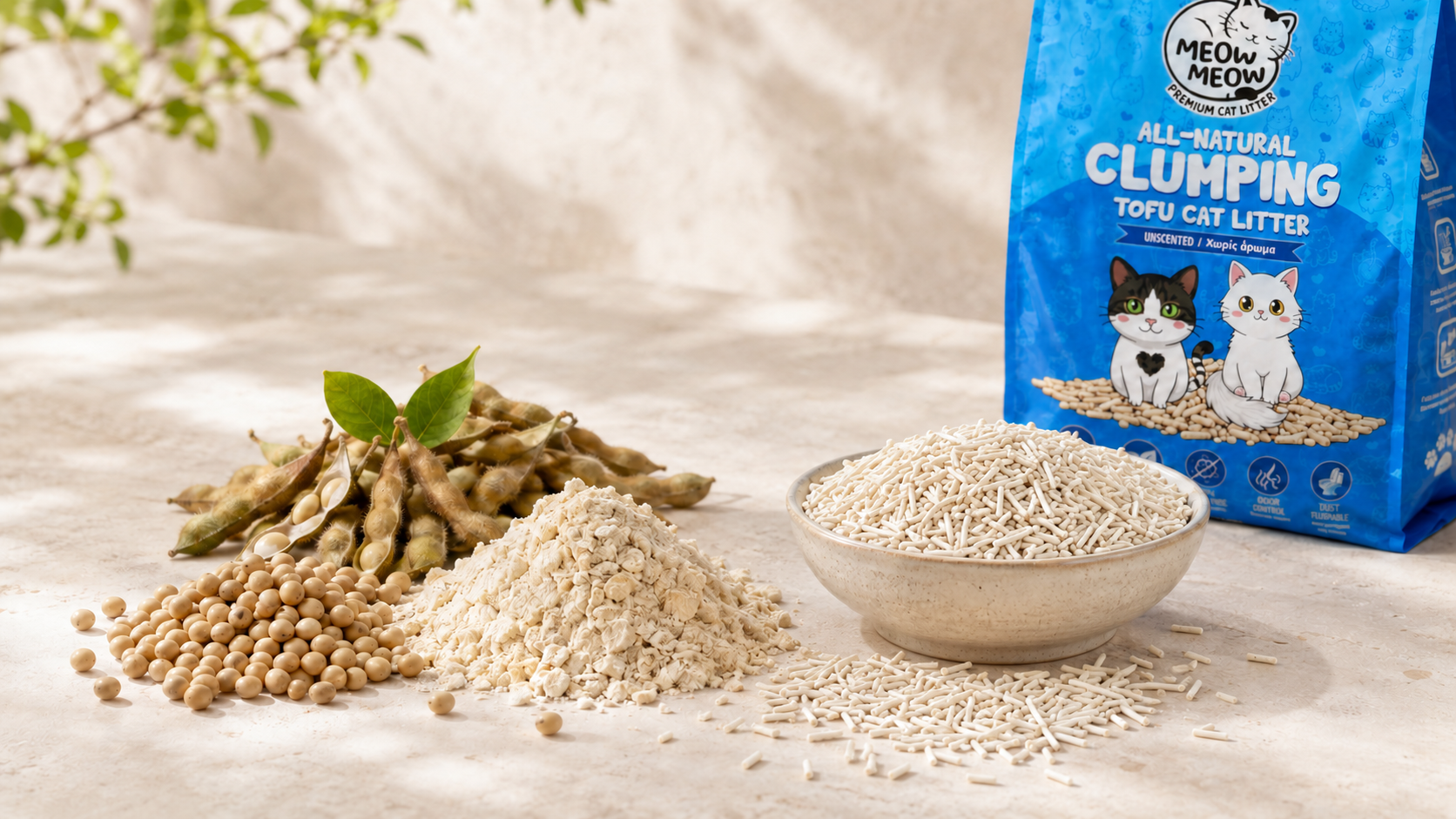
Tofu cat litter is a plant-based cat litter made primarily from processed soybean fibre and other ingredients that help the granules absorb liquid and bind together. The mixture is formed into small, lightweight pellets that soften when wet and create scoopable clumps.
Despite the name, it is not ordinary tofu taken from a kitchen and dried. It is a purpose-made litter material manufactured for moisture absorption, clumping and odour control.
2. What is tofu litter made from?
The principal material is soybean fibre, often derived from material remaining after soy products are made. Depending on the formulation, plant starches and functional clumping or odour-control ingredients may also be included.
Meow Meow is plant-based, unscented and biodegradable. It also contains a bacteriostatic agent that helps inhibit bacterial growth in the litter.
3. How is tofu litter different from bentonite litter?
Bentonite litter is a dense mineral clay. Tofu litter is made primarily from plant fibre and is considerably lighter for the same volume. Both can clump, but they behave differently: bentonite usually forms heavy mineral clumps, while tofu pellets absorb moisture, soften and bind into lighter clumps. Bentonite does not have the same efficiency when clumping when compared with Meow Meow Premium Litter.
Tofu litter is also biodegradable and typically produces much less airborne dust. Weight, dust, disposal and the amount of usable volume in a bag are important differences to consider when selecting cat litter.
4. Why is tofu litter becoming popular?
Its popularity is mainly practical. It is lighter to carry, low in dust, fast-clumping and easy to scoop. Plant-based ingredients also appeal to customers looking for an alternative to mined clay.
For apartment living, smaller homes and anyone who regularly carries litter upstairs, the reduction in weight can be especially noticeable.
Part 2: Safety, kittens and sensitive cats
5. Is tofu litter safe for cats?
Tofu litter is generally suitable for healthy adult cats when used as directed. Meow Meow premium tofu caat litter is free from harsh chemicals and is made from all-natural materials.
6. Is tofu litter suitable for kittens?
Its soft, lightweight pellets and low-dust character can make tofu litter a practical option for kittens. A shallow, easily accessible tray is usually best while a kitten is learning.
Very young kittens should still be supervised around litter, particularly during the stage when they investigate unfamiliar objects with their mouths. No cat litter should be treated as food.
7. What should I do if my cat eats some tofu litter?
A small accidental taste of plant-fibre litter may be less alarming than deliberate or repeated consumption, but tofu litter is not food.
Should your cat comsume any of its litter, irrespective of what type it is, contact your veterinarian. If a substantial amount was swallowed, symptoms appear, or the behaviour continues. Repeated litter eating can be associated with pica or another underlying problem and deserves veterinary attention.
8. Is low-dust litter useful for cats with asthma or respiratory sensitivities?
Reducing airborne litter dust can reduce exposure to a potential respiratory irritant. Cornell University's Feline Health Center includes irritating cat litter among the bronchial irritants that owners of asthmatic cats may need to minimise.
Meow Meow is 99% dust-free. A veterinarian should guide litter selection for a cat with diagnosed breathing problems. Unscented litter may also be preferable for cats or people who react to strong perfumes.
9. Is Meow Meow scented?
No. Meow Meow Premium Tofu Cat Litter is unscented. Rather than relying on a heavy fragrance to cover smells, it uses rapid absorption, clumping and its odour-control formulation to help contain unpleasant odours.
Unscented does not mean that a neglected tray will never smell. Daily scooping and regular cleaning remain essential.
Part 3: Dust, clumping and odour control
10. Is tofu litter really dust-free?
No loose granular product can promise that not a single particle will ever appear. The useful question is how much dust the litter produces when poured, disturbed and scooped.
Meow Meow is 99% dust-free. This helps reduce airborne litter dust and the fine residue that can settle around the tray. Pouring gently rather than dropping litter from a height will reduce disturbance further.
11. Does tofu litter clump well?
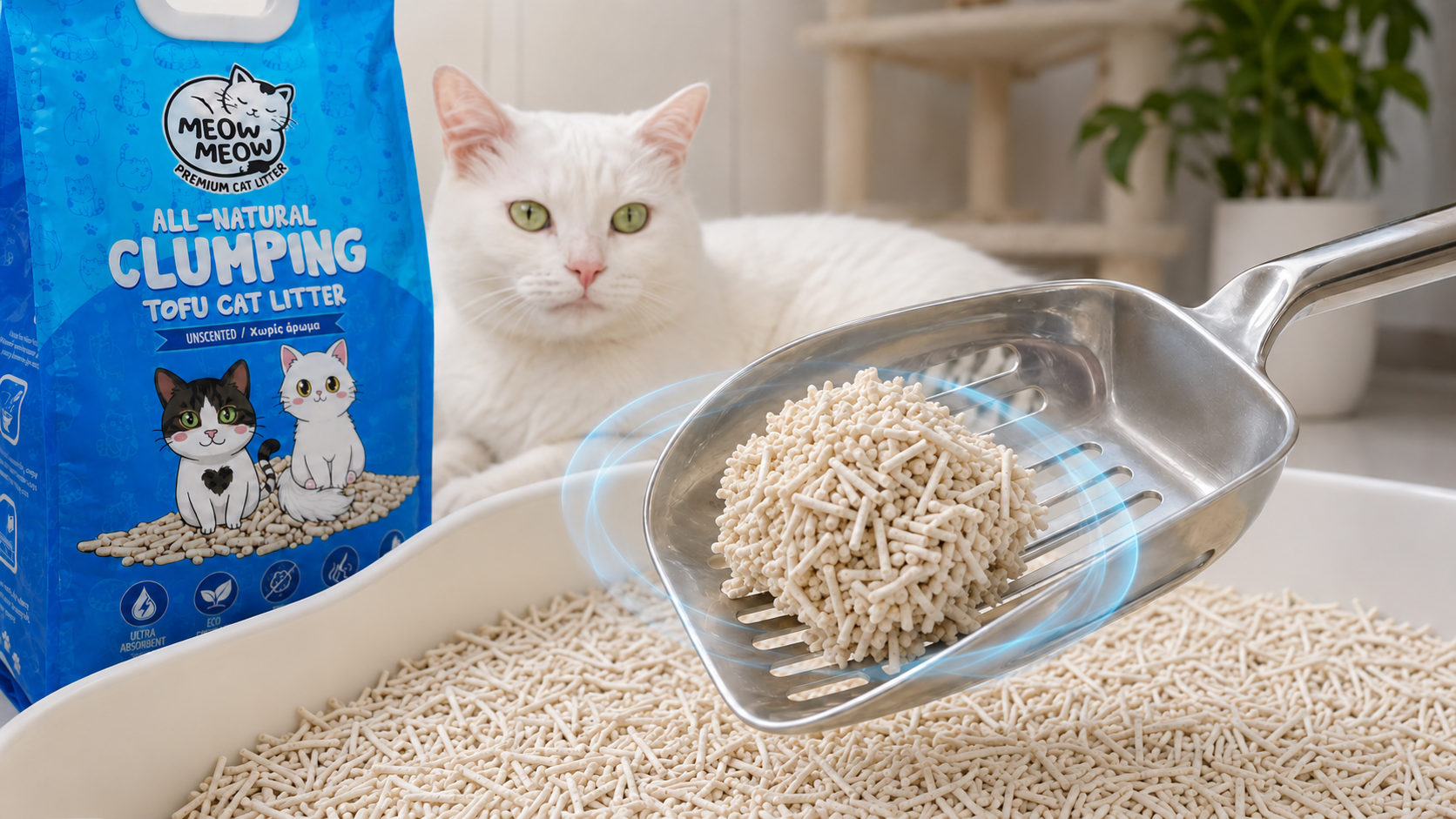
Our premium well-formulated tofu litter absorbs liquid quickly and forms compact clumps that can be lifted out with a scoop. Removing only the soiled clumps leaves the unused litter behind, so you can top up the tray instead of discarding clean material unnecessarily.
For the best results, maintain an adequate litter depth and allow a fresh clump a short moment to set before scooping. Extremely thin layers make it easier for urine to reach and stick to the bottom of the tray.
12. How does tofu litter control odours?
Odour control begins with moisture. Meow Meow rapidly absorbs liquid and contains it inside compact clumps, which can then be removed from the tray. Taking the source of the smell away is more effective than simply covering it with perfume.
The bacteriostatic component of the formula also helps inhibit bacterial growth. This supports odour control, but it does not sterilise or disinfect the litter box. Regular scooping and tray washing are still necessary.
13. What exactly does 'bacteriostatic' mean?
Bacteriostatic means that a substance helps inhibit the growth or multiplication of bacteria.
In practical terms, Meow Meow's bacteriostatic agent works alongside rapid absorption and clumping to help control the bacterial activity associated with unpleasant litter-box odours.
14. Does tofu litter track outside the box?
Some tracking is possible with any loose litter. Tofu pellets are light, so an occasional pellet may leave the tray on a cat's paws, but they do not create the same fine dusty residue associated with many mineral litters. Sililca litter is particularly guilty of being expelled out of the litter tray and tracking throughout the house.
A litter-catching mat, a high-sided tray and sensible litter depth can reduce tracking. Keep the tray large enough for your cat to turn comfortably without pushing litter over the edge.
Part 4: Everyday use, value and disposal
15. How much tofu litter should I put in the tray?
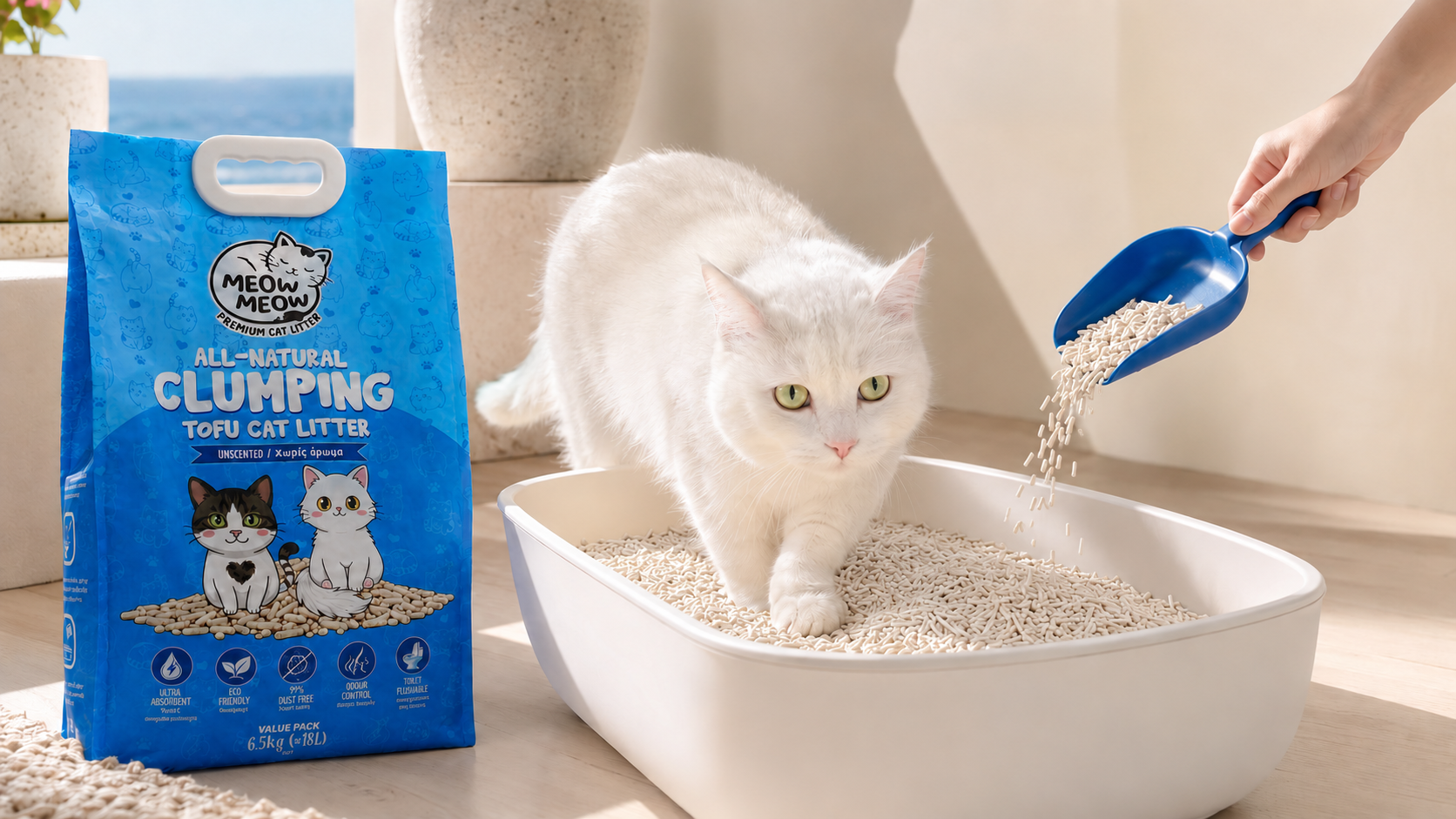
Begin with a layer approximately 5 to 7 cm deep. This gives the litter enough depth to absorb liquid and form a clump before moisture reaches the tray floor.
Cats have individual preferences, so adjust slightly if necessary. The aim is to provide enough depth for comfortable digging without overfilling the box.
16. How often should I scoop and completely change the litter?
Scoop urine clumps and faeces at least once a day, and more often in a multi-cat household. Top up the tray as the level falls. Daily removal of faeces is also an important hygiene practice; the CDC notes that Toxoplasma in cat faeces generally requires time before it becomes infectious.
There is no universal full-change schedule. The number of cats, tray size, litter depth, humidity and cleaning routine all matter. Empty and wash the tray when odour remains after scooping, the remaining pellets appear saturated, or residue accumulates on the box. Dry the tray completely before refilling it.
17. How long does a 6.5 kg bag last?
It depends on the number and size of cats, the tray, the litter depth and how efficiently clumps are removed. Giving a fixed number of weeks would therefore be misleading.
Fast, compact clumping can help a bag last because only the soiled portion is removed each day. Avoid throwing away clean litter during routine scooping, and top up the tray as needed.
18. Is 6.5 kg of tofu litter the same amount as 6.5 kg of bentonite?
No. Kilograms measure weight, not volume. Bentonite is a dense mineral, while tofu pellets are much lighter and occupy more space for the same weight. Two bags carrying the same kilogram figure can therefore contain very different amounts of litter by volume.
Meow Meow's 6.5 kg value pack contains approximately 18 litres. When comparing value, look at the bag's volume, clumping efficiency and expected waste as well as its weight and purchase price. Comparing kilograms alone can make dense clay appear equivalent when it may provide considerably less tray-filling volume.
19. How should I introduce tofu litter to my cat?
Cats are creatures of habit, and a sudden complete change can lead to rejection even when the new litter is perfectly suitable. Start by mixing a small amount of tofu litter into the familiar litter.
Over roughly 7 to 14 days, increase the proportion of tofu litter while reducing the old litter. If your cat hesitates, slow the process down. Keep the tray in its usual location and avoid changing the box, litter and location all at once.
20. Can tofu litter be flushed or composted in Cyprus?
Tofu fibre can break down in water, but that does not automatically mean used cat litter should enter every toilet, sewer or septic system. Plumbing capacity and local wastewater rules vary. Cat faeces can also contain pathogens, including Toxoplasma gondii.
For Cyprus households, sealed-bin disposal is the safest default unless the relevant local sewerage authority has explicitly confirmed that small amounts are acceptable. Never flush an entire tray, and do not flush litter into a septic system. If composting is permitted locally, keep used cat litter away from food crops and edible gardens. Clean, unused tofu litter is a different waste stream from litter contaminated with urine or faeces.
The short answer
Tofu litter is a lightweight, plant-based alternative to traditional mineral litter. Meow Meow Premium Tofu Cat Litter is unscented, 99% dust-free, fast-clumping and formulated for effective odour control. Its 6.5 kg pack provides approximately 18 litres, so weight alone should not be used when comparing it with dense bentonite litter.
Introduce it gradually, scoop every day, keep the bag sealed and dry, and use sealed-bin disposal unless your local authority advises otherwise. Most importantly, pay attention to your own cat: comfort, consistent tray use and good hygiene matter more than any single feature.
For a complete overview of the material and its benefits, read our guide to choosing tofu cat litter.
Ready to try tofu litter?
Meow Meow Premium Tofu Cat Litter is available for delivery throughout Cyprus. Choose recurring delivery and save 5% with a subscription.
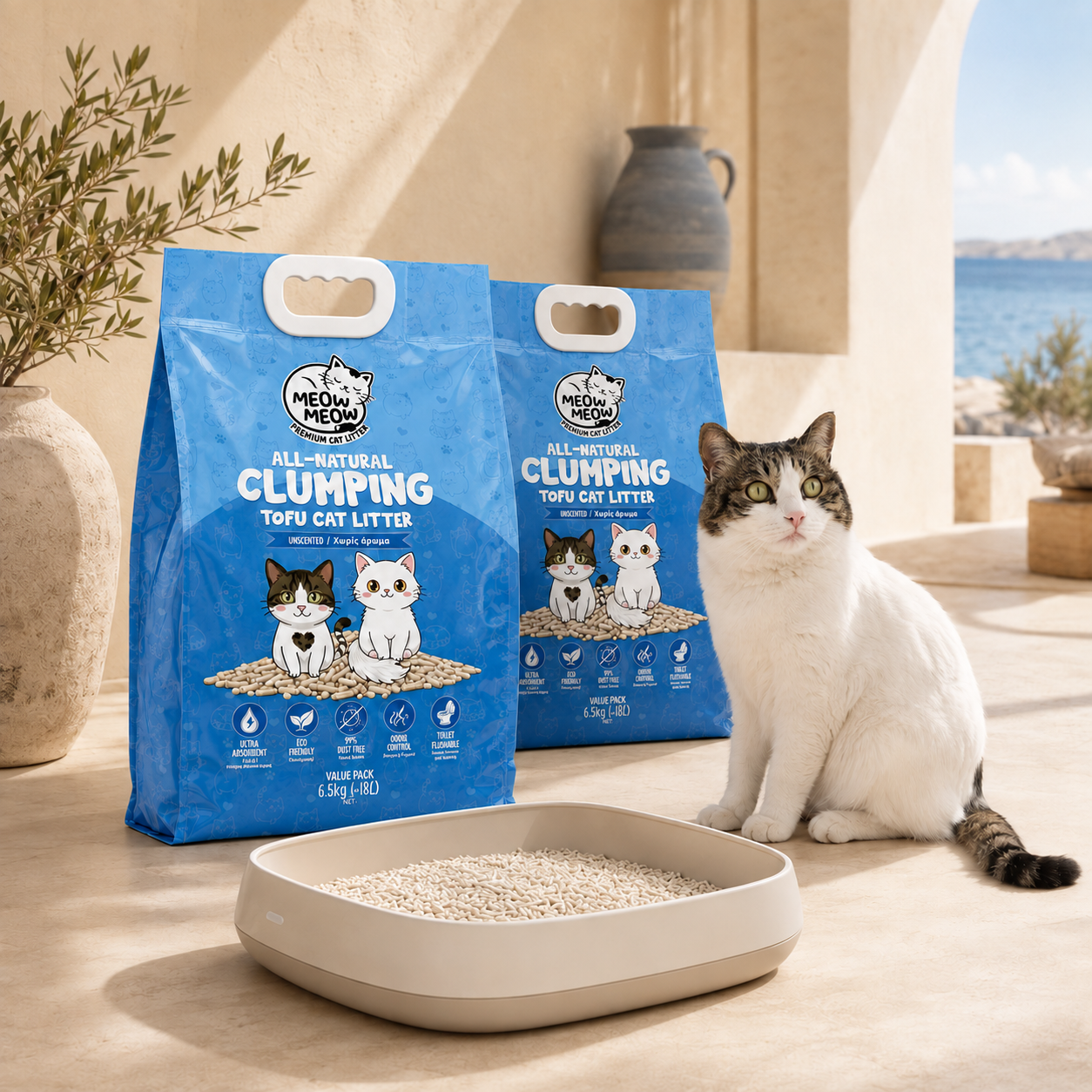
Designed for quality, convenience and your cat’s well-being, Meow Meow Premium Tofu Cat Litter provides a cleaner, fresher and more natural litter-box experience.
Made from high-quality soybean fibres and plant-based binders, its highly absorbent formula rapidly forms firm, compact clumps for quick and efficient scooping. A bacteriostatic agent helps suppress bacterial growth and control unpleasant litter-box odours—without added fragrance.
The carefully selected 2.0 mm litter grain size is less likely to cling to your cat’s paws, helping reduce litter tracking around your home. It is also 99.5% dust-free, creating a cleaner litter area and a more healthy and comfortable experience for both cats and their owners.
Benefits and features
Made from high-quality soybean fibres and plant-based binders
Natural and effective odour control
Bacteriostatic formula helps suppress bacterial growth and odours
Highly absorbent with fast, compact clumping
2.0 mm grain size helps reduce litter tracking on cats’ paws
99.5% dust-free
Unscented, with no added fragrance
Biodegradable and environmentally considerate
Free from formaldehyde, harmful chemicals, toxins and industrial binders
Lightweight and convenient to carry, store and pour
Suitable for cats of all breeds and life stages
Flushable in small amounts, where permitted by local plumbing and wastewater regulations
Pack size: 6.5 kg
Volume: Approximately 18 litres
Fragrance: Unscented
A cleaner litter box. A happier home. Make the switch to Meow Meow today.
Never run out of litter - Subscription Option Available!
Choose the number of bags you need and subscribe for automatic monthly delivery. Your order will be processed and sent each month without the need to reorder, giving you one less thing to remember—and 5% off our standard prices.