How Often Should You Clean and Replace Cat Litter—and How Long Does a Bag Really Last?
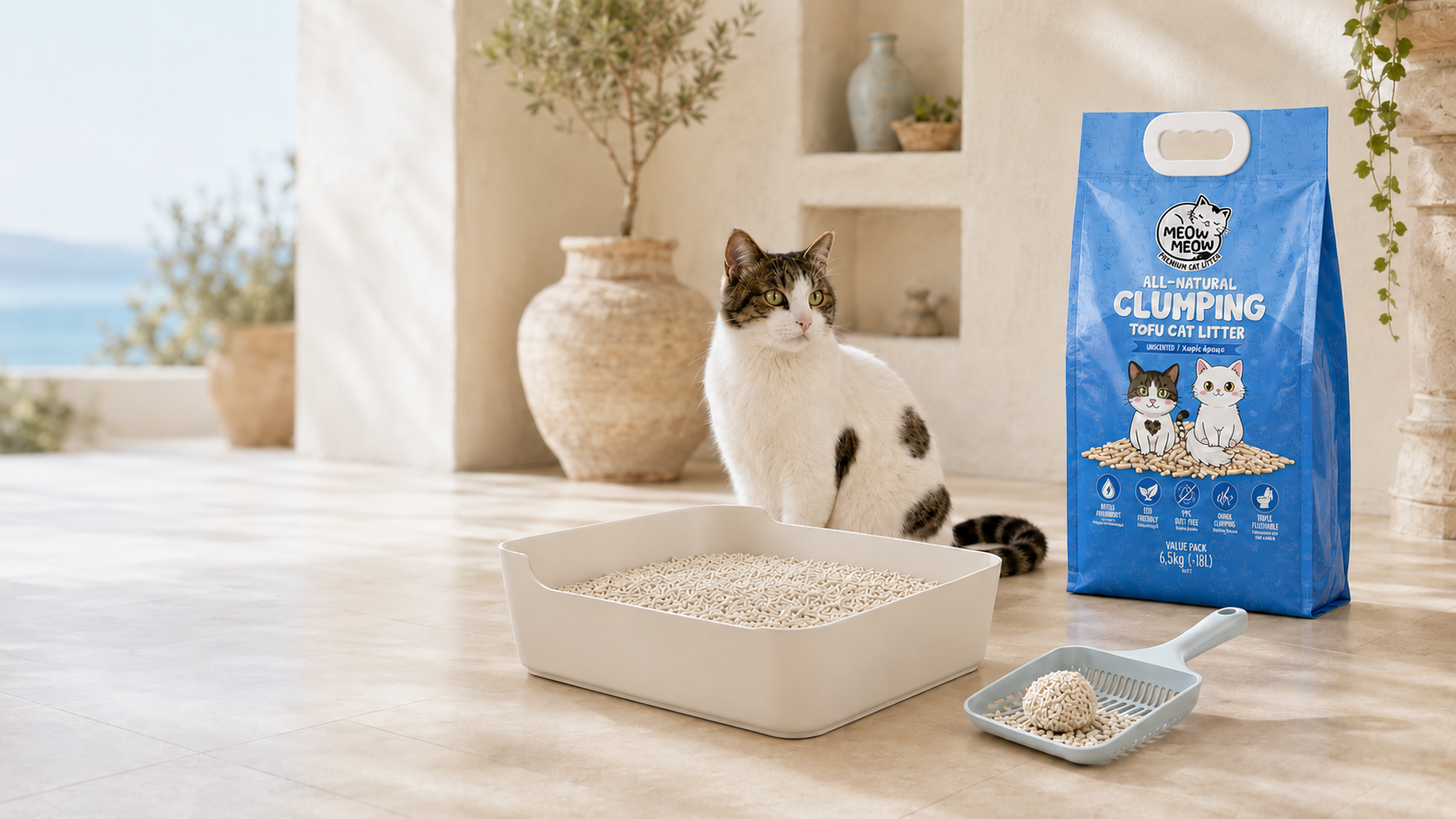
Keeping a litter tray clean is an important part of creating a comfortable home for your cat. However, knowing when to scoop, when to top up and when to replace all the litter is not always straightforward.
There is another question that matters when choosing cat litter: how much usable litter are you actually getting in the bag?
Cat litter is often sold and compared by weight, but kilograms alone can be misleading. A 6.5 kg bag of dense bentonite litter is not necessarily comparable to a 6.5 kg bag of lightweight tofu litter. The two materials can provide very different volumes, which affects how many times you can fill or replenish the tray—and potentially how long the bag will last.
How often should you scoop the litter tray?
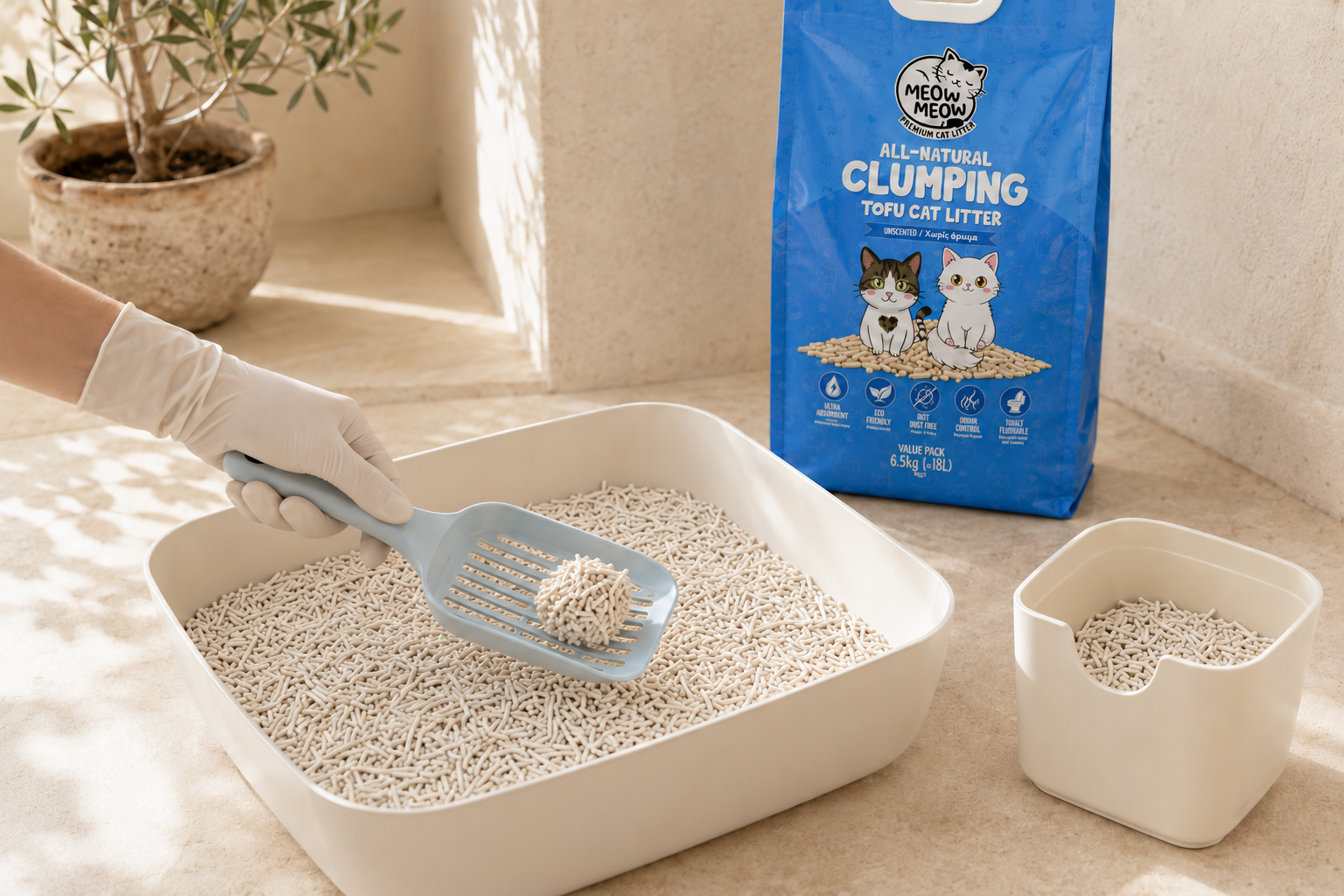
Clumps and solid waste should be removed at least once every day. In a multi-cat household or where a tray is used particularly frequently, scooping twice a day may be more appropriate.
Daily scooping helps to:
Keep the tray more pleasant for your cat
Prevent odours from building up
Stop soiled litter from becoming mixed through the clean litter
Make it easier to monitor changes in your cat’s toilet habits
Extend the useful life of the clean litter remaining in the tray
After removing the clumps, level the remaining litter and add a small amount of fresh litter when necessary.
With Meow Meow Tofu Cat Litter, we recommend maintaining an even layer approximately 5–7 cm deep. Sufficient depth allows moisture to be absorbed effectively and helps firm clumps form before liquid can reach the bottom of the tray.
When should you replace all the litter?
Daily scooping does not remove the need to empty and clean the entire tray periodically.
There is no single replacement schedule that suits every cat and every household. How frequently a complete change is needed will depend on:
The number of cats using the tray
The size of the litter tray
How frequently the tray is used
The depth of the litter
How effectively urine forms removable clumps
Whether clumps remain firm or break apart during scooping
How consistently the tray is maintained
Inspect the tray regularly and replace all the litter when:
An unpleasant odour remains after scooping
The litter feels generally damp
Wet litter or residue is collecting on the bottom
Clumps begin breaking apart and contaminating clean litter
The litter has become visibly dirty throughout
Your cat appears reluctant to use the tray
When performing a complete change, empty the tray and wash it with warm water and a mild, cat-appropriate cleaning product. Rinse it thoroughly and allow it to dry completely before adding fresh litter.
Avoid leaving strong-smelling cleaning-product residue behind. Cats have a highly developed sense of smell and may dislike an overwhelmingly perfumed tray even when it seems fresh to us.
Why efficient clumping matters
A clumping litter is intended to let you remove the soiled portion while leaving clean litter behind.
If a clump breaks apart when lifted, small contaminated pieces become distributed through the tray. This can create odour and cause otherwise usable litter to be discarded prematurely.
Meow Meow is designed to absorb moisture quickly and form firm, easy-to-scoop clumps. Removing only the affected litter—and regularly topping the tray back up to the correct depth—helps reduce unnecessary waste.
This is one reason the useful lifespan of a bag cannot be judged from its weight alone. The volume of litter in the bag and the amount discarded during each cleaning both matter.
The important difference between kilograms and litres
Kilograms measure weight. Litres measure volume.
Two bags can weigh exactly the same while containing very different amounts of material. A simple comparison would be a container filled with stones and another filled with lightweight wood pellets. The stones will weigh considerably more even if both containers hold the same volume.
The same principle applies when comparing dense mineral litter with lighter plant-based tofu litter.
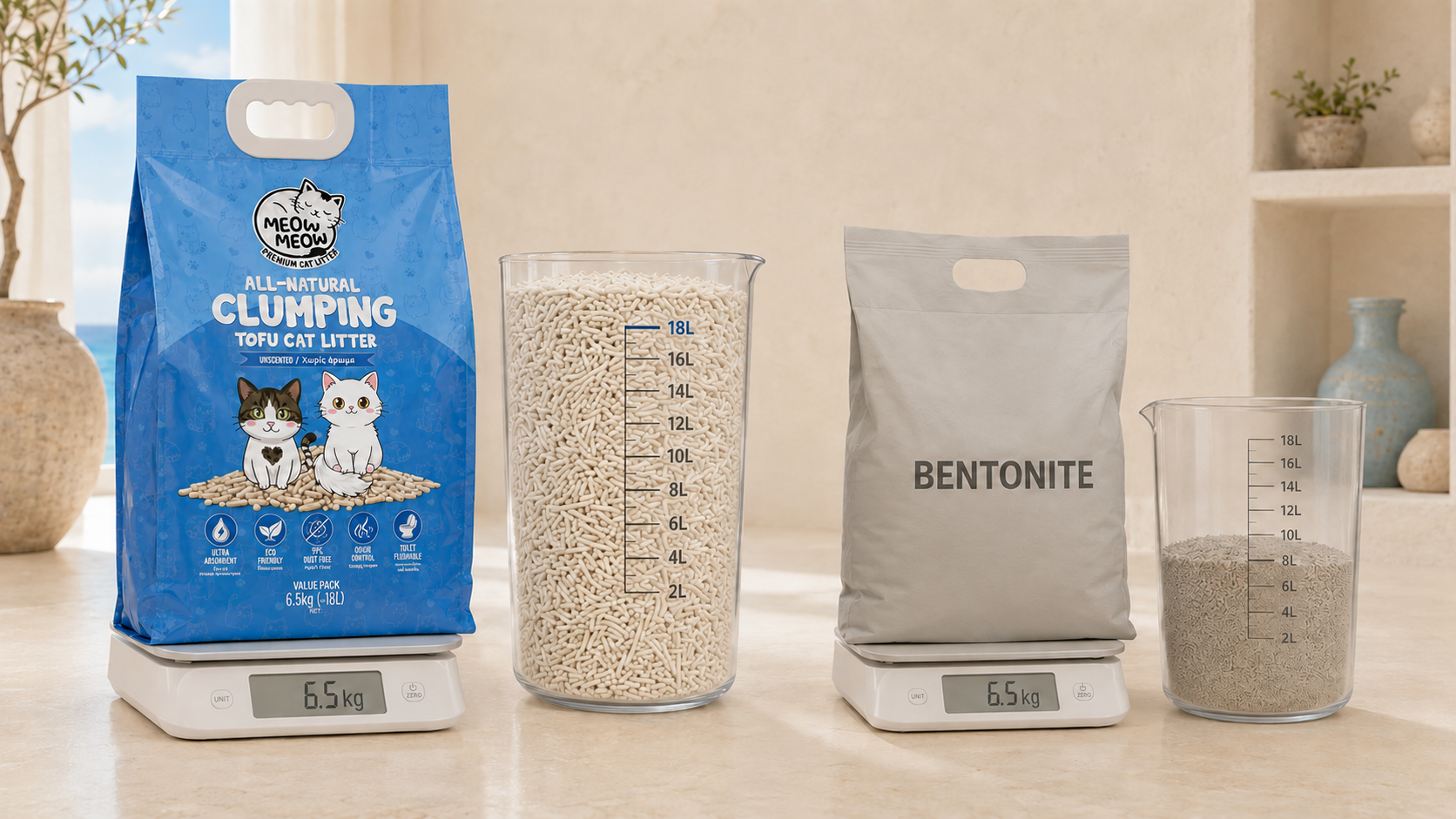
Each bag of Meow Meow Tofu Cat Litter contains 6.5 kg, equivalent to approximately 18 litres.
For comparison, a current bentonite product sold in Europe is packaged as 8 kg for 10 litres. Product formulations and densities vary between manufacturers, but this example clearly illustrates why weight alone does not provide a fair comparison.
The Same Weight Does Not Mean the Same Volume
Kilograms measure weight, while litres show how much physical litter the bag contains. This makes litres particularly important when comparing lightweight tofu litter with dense bentonite.
| Comparison | Meow Meow Tofu Litter | Example Bentonite Litter |
|---|---|---|
| Weight compared | 6.5 kg | 6.5 kg |
| Approximate usable volume | 18 litres | 8.1 litres |
| Approximate weight per litre | 0.36 kg/L | 0.80 kg/L |
| Approximate weight required for 18 litres | 6.5 kg | 14.4 kg |
| Material | Lightweight soybean-fibre tofu pellets | Dense mineral clay granules |
| Practical comparison | More physical litter by volume | Less volume at the same weight |
Compare cat litter by usable litres—not kilograms alone.
Bentonite figures are an illustrative comparison based on a product packaged as 8 kg / 10 L. Density varies between products and formulations, so individual bentonite litters may differ.
Using those pack ratios for illustration, 6.5 kg of the example bentonite litter would provide only around 8.1 litres.
That means:
6.5 kg of Meow Meow provides approximately 18 litres, while 6.5 kg of a denser bentonite product may provide considerably less volume.
Looking at the comparison in the opposite direction makes the difference even clearer. At the example density, 18 litres of bentonite would weigh approximately 14.4 kg—more than twice the weight of an 18-litre bag of Meow Meow.
This does not mean that every bentonite product has exactly the same density, nor does it guarantee that tofu litter will last precisely twice as long in every household. It does demonstrate why comparing two products purely by kilograms can give customers the wrong impression about quantity and value.
Why volume affects how long a bag lasts
The litter tray must be filled by volume, not by weight.
A particular tray needs enough physical litter to create a layer approximately 5–7 cm deep. Whether that layer weighs two kilograms, four kilograms or more depends on the density of the material.
A lighter litter provides more physical volume for the same weight. That additional volume can mean:
More initial tray fills
More litter available for regular top-ups
Less weight to carry for an equivalent tray volume
Easier handling when filling, storing and transporting the bag
This is particularly relevant when comparing tofu litter with bentonite. Bentonite may appear inexpensive when judged by the price per kilogram, but the customer may need substantially more weight to obtain the same usable volume.
Does 18 litres always last for the same amount of time?
No responsible manufacturer can guarantee that one bag will last every household for exactly the same number of weeks.
Actual usage varies according to:
The number of cats
Two or three cats will naturally use more litter than one cat. Multi-cat households may also need several trays, increasing the initial amount required.
The dimensions of the tray
A large tray needs more litter to achieve the same 5–7 cm depth than a compact tray.
Your cat’s individual habits
Some cats urinate more frequently, dig extensively or scatter more litter outside the tray. Age, diet, water consumption and health can also affect usage.
A sudden and persistent change in urination or litter-tray behaviour should be discussed with a veterinary professional.
How frequently you scoop
Leaving clumps in the tray for too long can allow them to be broken up by digging or repeated use. Removing them promptly helps protect the remaining clean litter.
The quality of the clumps
Firm, compact clumps allow the soiled area to be removed accurately. Soft or crumbling clumps often cause more clean litter to be discarded with the waste.
How much clean litter is thrown away
Using an unsuitable scoop or removing excessively large areas around each clump can waste a surprising amount of clean litter over time.
How to compare the real value of cat litter
When comparing different products, do not look only at the bag price or the number of kilograms printed on the front.
Consider:
How many litres are in the bag?
How much litter is required to fill the tray correctly?
How much clean litter is lost during scooping?
Do the clumps remain firm when removed?
How frequently must the tray be topped up?
How heavy is the equivalent usable volume to carry and store?
How effectively does the litter manage moisture and odour?
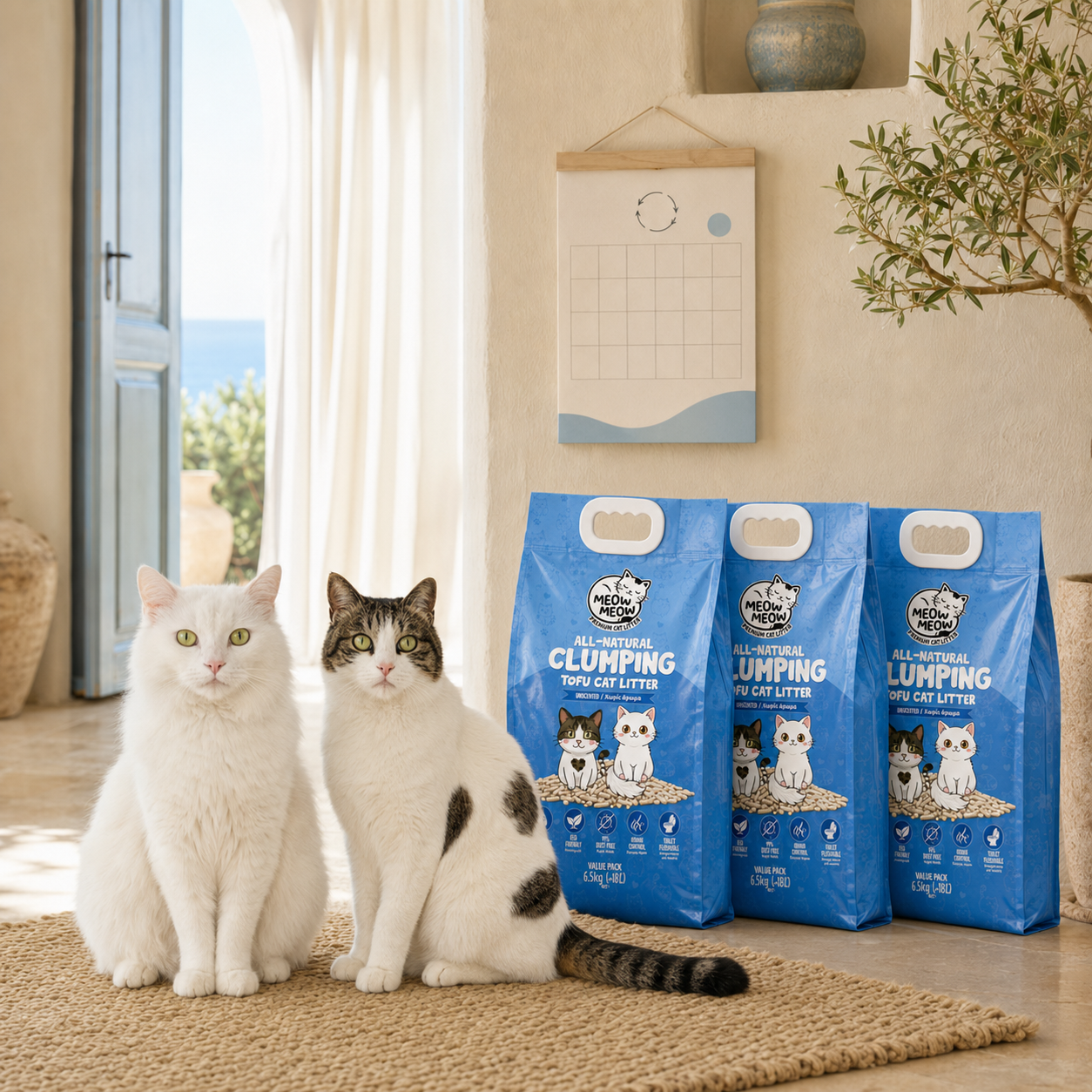
The most useful comparison is not simply price per kilogram. It is the cost of maintaining a clean, properly filled litter tray over time.
A simple way to monitor how long your litter lasts
Every household can calculate its own realistic usage rate:
Record the date when you open a new bag.
Fill the clean tray to a depth of approximately 5–7 cm.
Scoop at least once daily.
Top up only when necessary to maintain the correct depth.
Record when the bag becomes empty.
After one or two bags, you will have a reliable household-specific estimate. This is much more meaningful than a general promise because it reflects your tray, your cleaning routine and your cat’s individual habits.
It can also help you choose the most suitable monthly subscription quantity.
Clean regularly—but compare litter intelligently
Good litter-tray maintenance begins with daily scooping, regular top-ups and periodic complete cleaning. However, choosing an efficiently used litter can make that routine easier and reduce unnecessary waste.
Most importantly, remember that equal weight does not mean equal quantity.
A 6.5 kg bag of dense bentonite and a 6.5 kg bag of tofu litter may look comparable on paper, but their usable volumes can be very different. With approximately 18 litres in every 6.5 kg value pack, Meow Meow offers a generous amount of lightweight, plant-based litter designed for efficient everyday use.
Meow Meow All-Natural Clumping Tofu Cat Litter
6.5 kg value pack—approximately 18 litres
Fast clumping and easy cleaning
Outstanding absorption and odour control
99.5% dust-free
Unscented, with no added fragrance
Plant-based and biodegradable
Lightweight and convenient
Available for delivery throughout Cyprus.
Subscribe for automatic monthly delivery and save 5% on every order.
A cleaner litter box. A happier home.
If you are comparing different litter materials, explore the benefits of tofu cat litter.
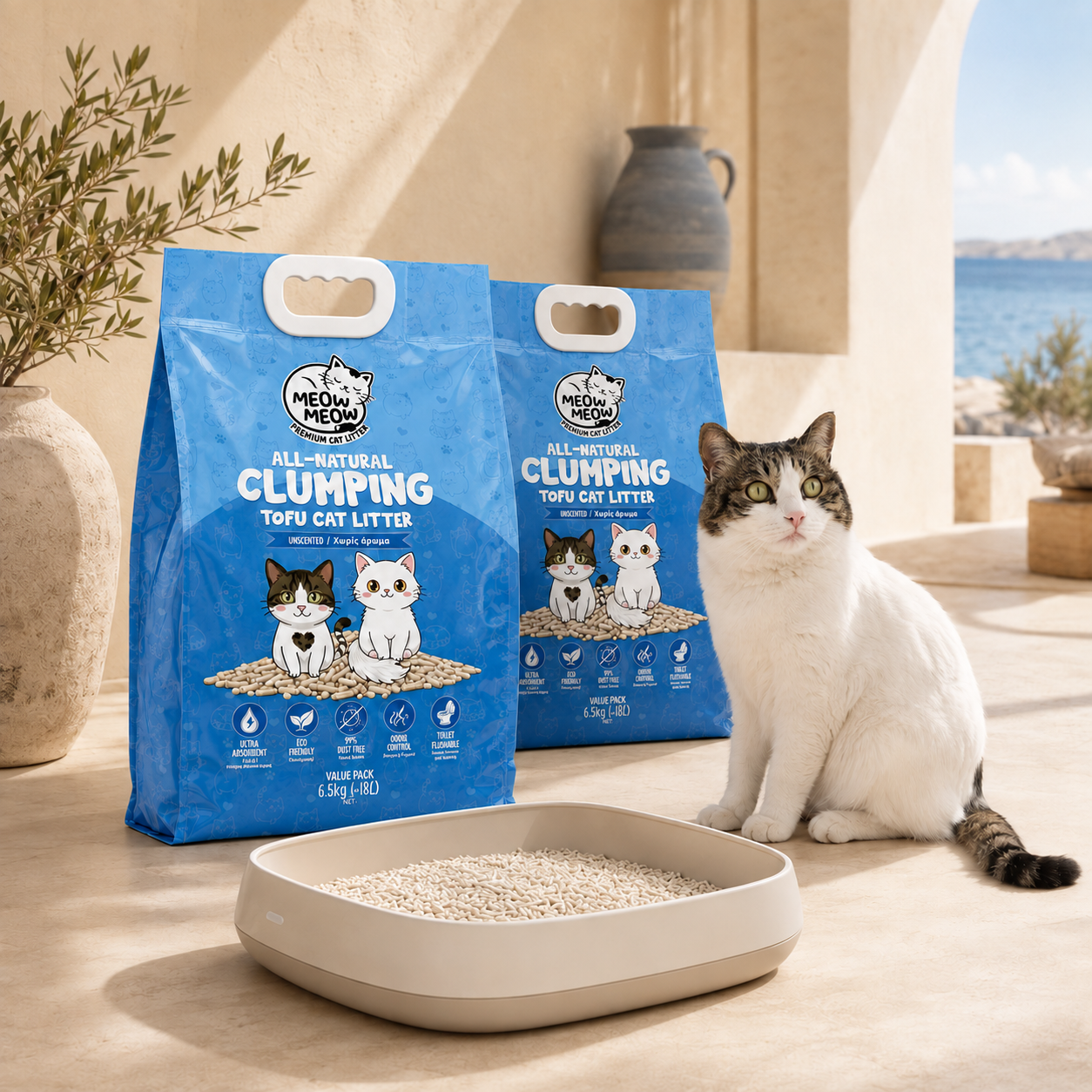
Designed for quality, convenience and your cat’s well-being, Meow Meow Premium Tofu Cat Litter provides a cleaner, fresher and more natural litter-box experience.
Made from high-quality soybean fibres and plant-based binders, its highly absorbent formula rapidly forms firm, compact clumps for quick and efficient scooping. A bacteriostatic agent helps suppress bacterial growth and control unpleasant litter-box odours—without added fragrance.
The carefully selected 2.0 mm litter grain size is less likely to cling to your cat’s paws, helping reduce litter tracking around your home. It is also 99.5% dust-free, creating a cleaner litter area and a more healthy and comfortable experience for both cats and their owners.
Benefits and features
Made from high-quality soybean fibres and plant-based binders
Natural and effective odour control
Bacteriostatic formula helps suppress bacterial growth and odours
Highly absorbent with fast, compact clumping
2.0 mm grain size helps reduce litter tracking on cats’ paws
99.5% dust-free
Unscented, with no added fragrance
Biodegradable and environmentally considerate
Free from formaldehyde, harmful chemicals, toxins and industrial binders
Lightweight and convenient to carry, store and pour
Suitable for cats of all breeds and life stages
Flushable in small amounts, where permitted by local plumbing and wastewater regulations
Pack size: 6.5 kg
Volume: Approximately 18 litres
Fragrance: Unscented
A cleaner litter box. A happier home. Make the switch to Meow Meow today.
Never run out of litter - Subscription Option Available!
Choose the number of bags you need and subscribe for automatic monthly delivery. Your order will be processed and sent each month without the need to reorder, giving you one less thing to remember—and 5% off our standard prices.