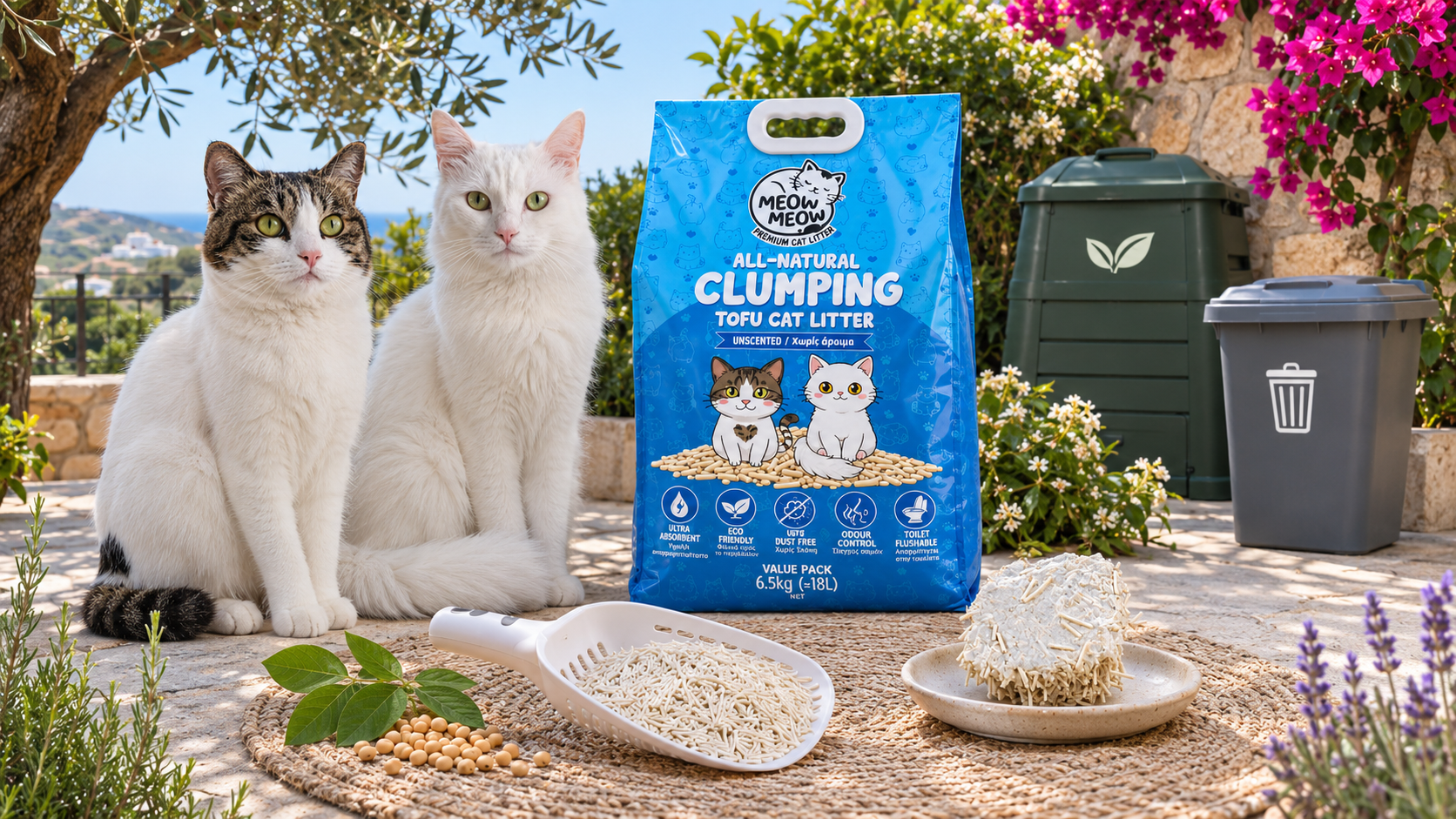
Tofu cat litter is made primarily from plant-based soybean fibres, so it is biodegradable by nature. This naturally raises a question for environmentally conscious cat owners: can used tofu cat litter be added to a compost bin?
The short answer is more complicated than a simple yes or no.
Although the litter material itself can break down naturally, used cat litter may contain urine, faeces, bacteria and parasites. These contaminants change how the litter should be handled. Composting guidance available from municipalities and environmental initiatives in Cyprus generally excludes animal waste and used cat litter from ordinary household compost.
Here is what cat owners need to know before putting any type of cat litter into their garden compost, organic-waste collection or toilet.
Biodegradable and compostable do not mean exactly the same thing
The words biodegradable and compostable are often used interchangeably, but there is an important distinction.
A biodegradable material can be broken down naturally by microorganisms over time. A compostable material must break down under suitable composting conditions without leaving harmful residues in the finished compost.
Meow Meow Tofu Cat Litter is made primarily from soybean fibres and plant-based binders. Unlike mineral-based clay or silica litter, its plant-based material is biodegradable.
However, a biodegradable product does not automatically belong in every home compost bin or municipal organic-waste collection. Once litter has been used by a cat, it is no longer simply a clean plant-based material—it becomes animal waste.
The complete formulation also matters. Tofu litters can contain different binders, fragrances and additives, so two products described as “tofu litter” may not have exactly the same composting characteristics. Always check the ingredients and the manufacturer’s disposal guidance rather than assuming every plant-based litter can be composted in the same way.
Why used cat litter requires special care
The primary concern is not the tofu litter itself. It is what may be present in the waste deposited in it.
Cat faeces can carry bacteria and parasites, including Toxoplasma gondii. This parasite can contaminate soil and water, and people may be exposed after handling contaminated litter, soil or other material.
This is particularly important for:
Pregnant women
People with weakened immune systems
Young children
Anyone handling soil used to grow food
Ordinary home compost piles may not maintain a sufficiently high and consistent temperature throughout the entire pile to neutralise every potential pathogen. The centre of a compost pile may become hot while material around its edges remains at a much lower temperature.
For this reason, used cat litter should never be treated in the same way as fruit peelings, coffee grounds or garden clippings.
Can tofu cat litter be composted at home?
The plant-based litter material can decompose, but the safest practical guidance for households in Cyprus is not to place used cat litter in an ordinary home compost bin.
Local composting guidance generally recommends keeping animal waste and cat litter out of domestic compost. Household compost systems are normally intended for materials such as fruit and vegetable scraps, coffee grounds, leaves, untreated plant material and garden clippings.
Even when all visible faeces have been removed, small traces may remain in the litter. Urine-soaked litter can also affect the moisture, odour and balance of a small compost pile.
A successful composting process requires an appropriate combination of:
Oxygen
Moisture
Carbon-rich materials
Nitrogen-rich materials
Sufficient volume
Suitable temperatures
Regular turning and monitoring
Most household compost bins are not designed or monitored as specialist pet-waste systems.
If you are considering any specialist pet-waste composting method, first consult your municipality or local waste authority. Do not assume that biodegradable litter is accepted in municipal organic-waste or green-waste collections.
What about a dedicated pet-waste compost system?
Some composting guides discuss using a completely separate system for biodegradable litter and pet waste. These systems should never be mixed with compost intended for food-producing gardens.
However, a separate bin does not automatically eliminate the health risks. A domestic compost pile can be difficult to monitor, and it may not consistently maintain the conditions required to reduce pathogens throughout all of its contents.
Commercial or specialist composting facilities may be better equipped to control temperature and processing conditions, but only use such a service if it specifically confirms that it accepts cat litter and pet waste.
A facility that accepts garden waste, food scraps or ordinary household organic waste should not be assumed to accept animal waste.
Never use cat-waste compost on food crops
Compost that has contained used cat litter should never be used around:
Vegetables
Fruit trees
Herbs
Salad crops
Food-producing vines
Any other plant intended for human consumption
Even guides that discuss controlled pet-waste composting generally restrict the finished material to ornamental plants.
Possible non-food uses sometimes mentioned for properly processed pet-waste compost include ornamental flowers, shrubs and decorative landscaping. Nevertheless, the safest option for most households remains keeping used cat litter out of the home compost system altogether.
A domestic compost pile cannot easily be tested to confirm that every part of it has reached and maintained the temperature needed to make animal waste safe.
Can unused tofu litter be composted?
Clean, unused tofu litter is different from litter that has been placed in a cat tray.
Because unused tofu litter is made primarily from plant-based material, it can biodegrade under suitable conditions. A small amount of completely clean, unused litter may be suitable for a private compost system when its full ingredient list contains no unsuitable additives.
If you are considering this, remember to:
Check the product’s complete ingredients
Add only a small quantity at a time
Mix it thoroughly with other compostable materials
Maintain sufficient airflow and moisture
Follow the manufacturer’s instructions
Follow local composting rules
Never place it in municipal organic waste unless the service specifically accepts it
This distinction applies only to completely clean, unused litter—not litter removed from a cat tray.
Can tofu litter go in Cyprus green-waste collections?
Green Points and green-waste services generally accept materials such as branches, leaves, pruning waste and other separately collected garden materials. They should not be assumed to accept used cat litter, pet waste or mixed household organic waste.
Requirements and accepted materials can vary between municipalities and waste operators in Cyprus. Contact your local authority before placing any pet-related material in an organic or green-waste collection.
If the service does not expressly state that used cat litter or pet waste is accepted, keep it out of the collection.
Biodegradable does not necessarily mean that a product belongs in the green-waste bin.
Can tofu cat litter be flushed?
Tofu litter softens and breaks apart in water more readily than mineral-based litter, but that does not mean flushing is appropriate for every home or municipality.
Even small clumps can present problems where:
The property uses a septic system
Plumbing is old, narrow or prone to blockages
Large quantities are flushed together
Local wastewater guidance prohibits pet waste
Clumps are not given sufficient time to soften
Wastewater concerns also extend beyond household plumbing. Cat waste may contain parasites and other contaminants that should not be introduced into water systems unnecessarily.
Only consider flushing a small individual clump if local wastewater rules permit it and the property is connected to a suitable sewer system. Never flush large quantities, multiple clumps together or the contents of an entire litter tray.
When in doubt, use the household-waste method.
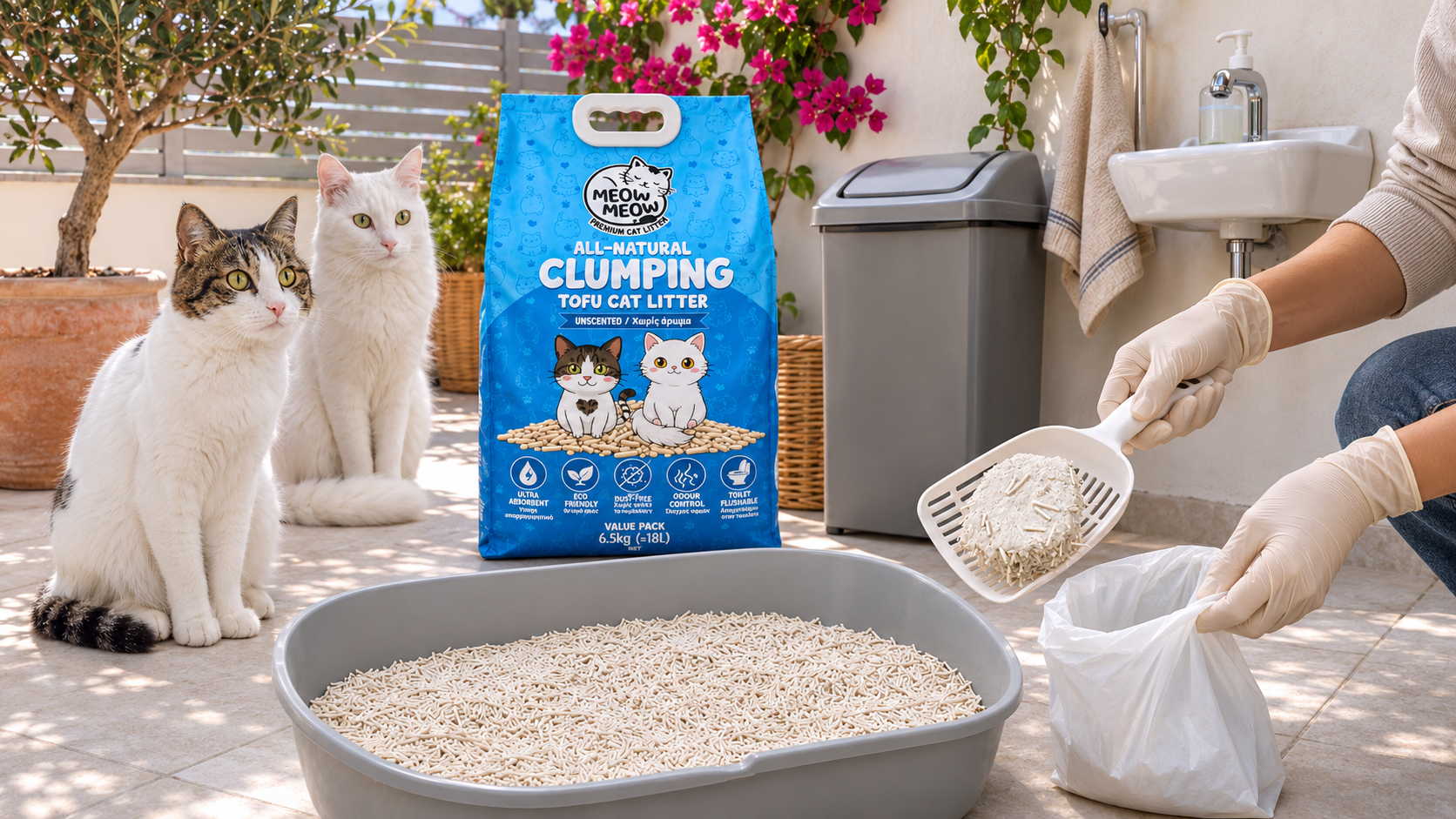
For most cat owners in Cyprus, the simplest and safest method is:
Scoop clumps and solid waste from the tray every day.
Place the waste in a secure bag.
Seal the bag to contain moisture and odours.
Put it in the appropriate general household-waste bin.
Wash your hands thoroughly after cleaning the tray.
Daily scooping also helps maintain a cleaner and more hygienic litter box.
According to the US Centers for Disease Control and Prevention, the parasite responsible for toxoplasmosis does not become infectious immediately after being shed. It generally requires between one and five days. Cleaning the litter tray every day therefore helps remove faeces before the parasite can become infectious.
Pregnant women and people with weakened immune systems should, where possible, ask another household member to clean the litter box. If this is not possible, disposable gloves should be worn and hands should be washed thoroughly with soap and water afterwards.
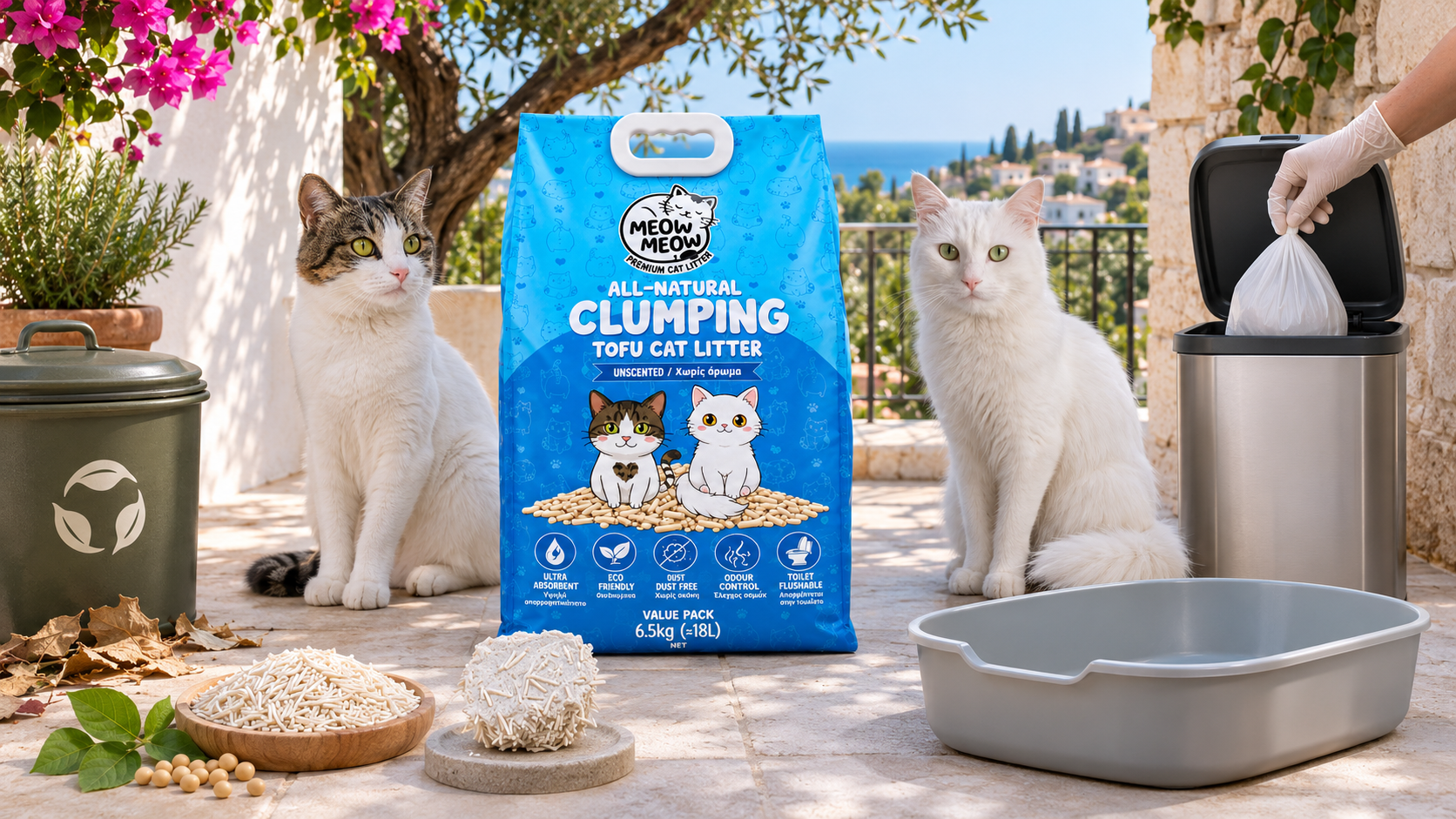
Does disposal in general waste cancel the environmental benefits?
Not necessarily.
The environmental characteristics of cat litter begin with what it is made from, how it is produced and transported, how much dust it creates and how effectively it performs.
Plant-based tofu litter offers an alternative to traditional mineral litters made from materials such as bentonite clay or silica. These mineral materials do not biodegrade in the same way as soybean fibres.
Meow Meow is also lightweight, highly absorbent and designed to form firm clumps. Effective clumping allows the soiled portion of the litter to be removed without unnecessarily discarding all the clean litter remaining in the tray.
Responsible environmental choices should consider the complete picture—not simply whether a used product can be placed in a compost bin.
Using a biodegradable, plant-based litter while disposing of contaminated litter safely provides a sensible balance between environmental considerations and responsible waste handling.
How to reduce litter-box waste responsibly
Even if used litter must go into general household waste, there are still practical ways to reduce unnecessary waste:
Scoop at least once a day
Frequent scooping removes compact clumps before they break apart and contaminate more of the surrounding clean litter.
Maintain an appropriate litter depth
An even layer approximately 5–7 cm deep helps the litter absorb moisture and form compact clumps effectively. A layer that is too shallow may allow urine to reach the bottom of the tray and spread.
Remove only the affected litter
A strong clumping litter allows you to lift the soiled material while leaving clean litter behind.
Top up instead of replacing everything unnecessarily
Add fresh litter as required to maintain the correct depth. The entire tray should still be emptied and cleaned periodically, but efficient daily maintenance can extend the useful life of the clean litter.
Store opened litter correctly
Reseal the bag and keep it in a cool, dry place. Protecting the litter from moisture preserves its absorbency and clumping performance.
A practical rule to remember
When deciding how to dispose of tofu cat litter, separate the litter material from its contamination:
Clean, unused tofu litter: Plant-based and biodegradable, but compost it only where the ingredients and local rules allow.
Used litter from a cat tray: Treat it as animal waste.
Litter containing faeces: Do not place it in ordinary household compost.
Municipal organic or green waste: Use only if the operator specifically confirms that pet waste is accepted.
Compost associated with cat waste: Never use it on edible plants.
Unsure about local requirements: Seal it securely and dispose of it with general household waste.
The bottom line
Tofu cat litter is made from biodegradable plant material, but used tofu litter is not automatically suitable for home or municipal composting.
For cat owners in Cyprus, the safest general approach is to scoop the tray daily, seal used litter securely and place it in the appropriate household-waste bin. Keep it out of ordinary compost, food-growing areas and green-waste collections unless your municipality or waste operator provides specific instructions saying otherwise.
Choosing a plant-based litter can still reduce reliance on conventional mineral materials. Safe disposal simply ensures that good environmental intentions do not create unnecessary health or waste-management risks.
Meow Meow Premium Tofu Cat Litter is unscented, 99.5% dust-free and supplied in a generous 18 L value pack. Its fast, firm clumping and effective odour control make everyday litter-box care cleaner and more convenient.
Shop Meow Meow Premium Tofu Cat Litter
Sources and further reading
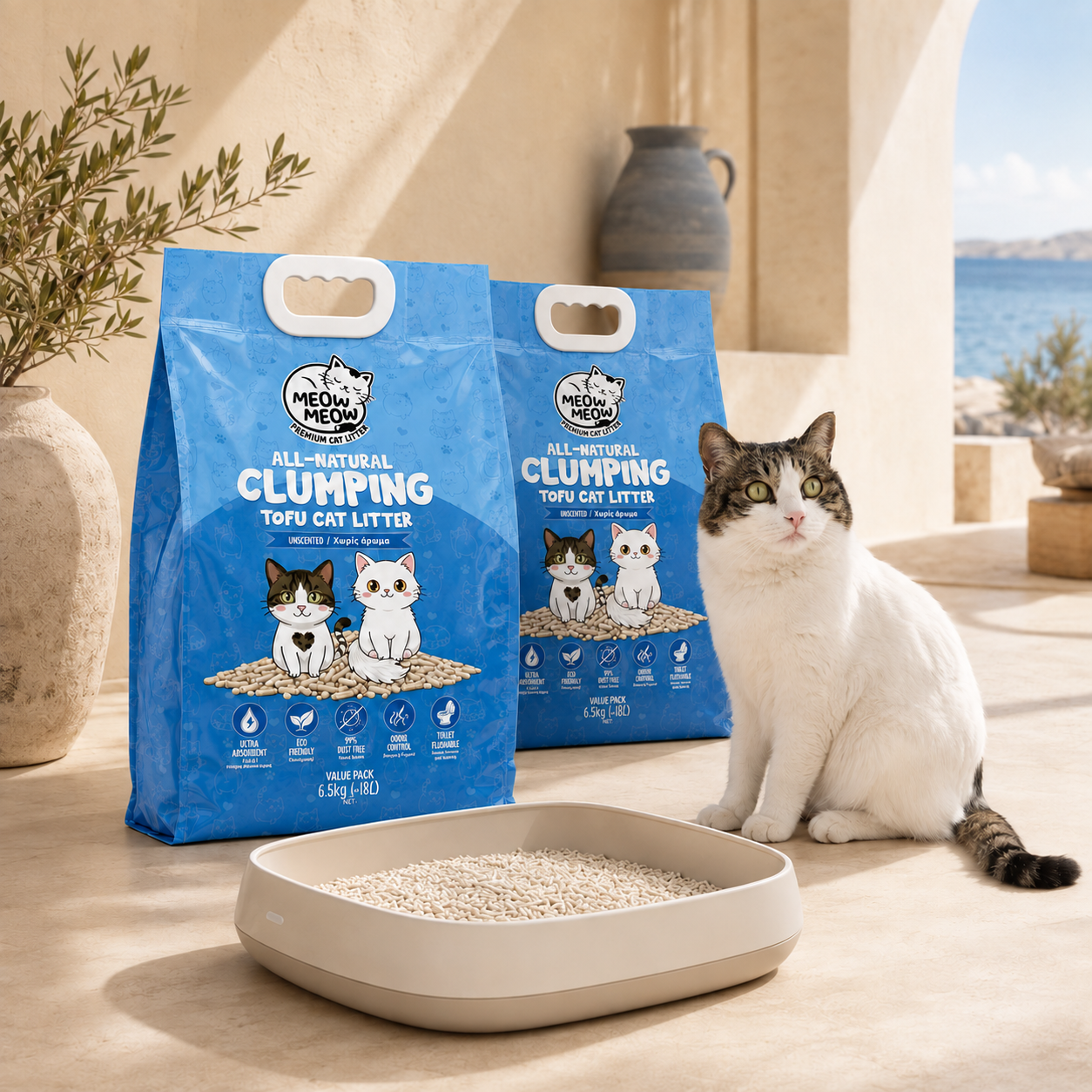
Designed for quality, convenience and your cat’s well-being, Meow Meow Premium Tofu Cat Litter provides a cleaner, fresher and more natural litter-box experience.
Made from high-quality soybean fibres and plant-based binders, its highly absorbent formula rapidly forms firm, compact clumps for quick and efficient scooping. A bacteriostatic agent helps suppress bacterial growth and control unpleasant litter-box odours—without added fragrance.
The carefully selected 2.0 mm litter grain size is less likely to cling to your cat’s paws, helping reduce litter tracking around your home. It is also 99.5% dust-free, creating a cleaner litter area and a more healthy and comfortable experience for both cats and their owners.
Benefits and features
Made from high-quality soybean fibres and plant-based binders
Natural and effective odour control
Bacteriostatic formula helps suppress bacterial growth and odours
Highly absorbent with fast, compact clumping
2.0 mm grain size helps reduce litter tracking on cats’ paws
99.5% dust-free
Unscented, with no added fragrance
Biodegradable and environmentally considerate
Free from formaldehyde, harmful chemicals, toxins and industrial binders
Lightweight and convenient to carry, store and pour
Suitable for cats of all breeds and life stages
Flushable in small amounts, where permitted by local plumbing and wastewater regulations
Pack size: 6.5 kg
Volume: Approximately 18 litres
Fragrance: Unscented
A cleaner litter box. A happier home. Make the switch to Meow Meow today.
Never run out of litter - Subscription Option Available!
Choose the number of bags you need and subscribe for automatic monthly delivery. Your order will be processed and sent each month without the need to reorder, giving you one less thing to remember—and 5% off our standard prices.